Moving to Switzerland: Pros, Cons, Requirements & Costs
 Clemens Kohlbacher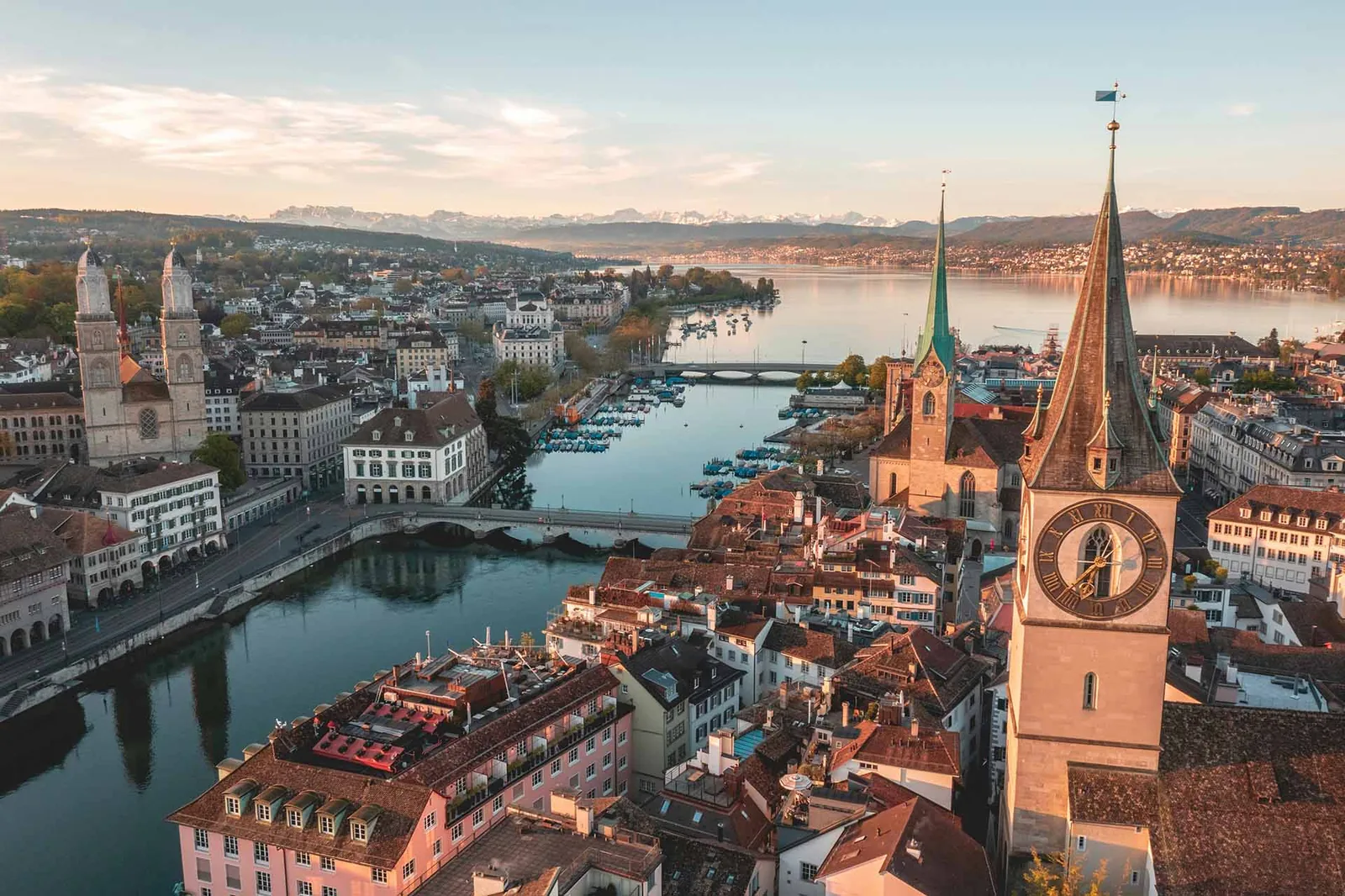
Table of contents
Emigrating to Switzerland is a dream for many. After all, the country offers a significantly higher quality of life and lower taxes compared to Austria and Germany. In addition, it is safer and politically neutral or independent.
This comprehensive article explains everything about moving to Switzerland. Starting from the pros and cons to the requirements, costs, and frequently asked questions.
Advantages
Emigrating to Switzerland brings a number of advantages for many people – especially for Austrians and Germans, who often settle in quickly both culturally and linguistically. The specific advantages naturally depend on your personal goals, but here are the most important and common benefits:
High quality of life
Switzerland is one of the countries with the highest quality of life worldwide. This is evident, among other things, in a clean environment, well-functioning infrastructure, high public safety, good healthcare, and stable politics.
Good health system
The medical care is excellent. Although the system is expensive (with a mandatory private basic insurance), the services and access to specialists are at a very high level.
Stability and security
Switzerland is politically neutral, economically very stable, and has a low crime rate. The country is often referred to as a safe haven – also for assets and long-term life planning.
Favorable tax conditions (depending on the canton)
Compared to Germany or Austria, the Taxes in Switzerland (depending on the canton) be significantly lower – especially for the self-employed or people with high incomes and/or wealth. Cantons such as Zug, Schwyz, or Nidwalden are particularly attractive.
Proximity to nature and recreational value
The Alps, lakes, forests, and the generally very well-kept landscape offer enormous recreational opportunities – whether hiking, skiing, mountain biking, or simply relaxation. Many people appreciate the balance between work and nature.

Multicultural and multilingual society
People from all over the world live in Switzerland, yet there is a strong local connection to the region. Multilingualism (German, French, Italian, and Romansh) makes the country culturally diverse – which is particularly exciting for people who like living between cultures.
Proximity to Germany and Austria
You stay close to home geographically, have short distances to friends and family, and can travel back at any time—that often makes the transition easier than emigrating overseas.
Economic opportunities and high prosperity
Switzerland is one of the wealthiest countries in the world, with a strong financial sector, a solid industrial base, and a high level of innovation. For entrepreneurs, the self-employed, and highly skilled professionals, there are many opportunities – both as employees and in self-employment.
Disadvantages
Although Switzerland offers many advantages, there are of course also some potential disadvantages, which one should know and realistically weigh – especially as an expatriate from Germany or Austria. Here are the most important points that are mentioned again and again:
High cost of living
Switzerland is one of the most expensive countries in Europe. Rent, health insurance, groceries, restaurant visits, and many everyday products often cost significantly more than in Germany or Austria. Especially in cities like Zurich, Geneva, or Lausanne, the cost of living can be very high.
Obligation to have expensive health insurance
Unlike in Germany or Austria, there is no state health insurance. You must a private basic insurance within three months to conclude – regardless of your health status or income. The monthly premiums are high and increase annually. Supplementary insurance costs extra.
Regulations and bureaucracy
Although much is regulated efficiently, the cantonal differences are sometimes confusing. Almost every canton has its own rules for taxes, the school system, building permits, etc. This can be a challenge at first, especially for the self-employed or newcomers.
Prerequisites
1. Right of residence and registration
If you want to stay in Switzerland for longer than 90 days, you must register with the responsible register with the local municipality and apply for a residence permit. For that you need:
a valid passport or identity card
proof of the purpose of stay (e.g., employment contract, university place, sufficient financial resources in the case of non-employment)
2. Work
As an EU citizen (including Germans and Austrians), you are generally allowed to work in Switzerland. However, you need a corresponding residence permit:
Residence permit L (short stay, for employment contracts under one year)
Residence permit B (for employment contracts of more than one year or for open-ended contracts)
Residence permit C (Permanent residence, usually after five or ten years of stay)
3. Apartment / Residence
You must be able to prove a permanent residential address. The apartment search can be challenging depending on the region (e.g., Zurich, Geneva) and rental prices are high.
4. Mandatory health insurance
As soon as you live in Switzerland, you must have a Swiss health insurance complete it within three months of entry.
5. Languages
Depending on the canton, you should command the national language (German, French, Italian). For certain residence permits, proof of language skills may be required, especially for long-term stays or naturalization.
6. Wealth (instead of employment)
Even as a private individual, you can move to Switzerland, but you must prove sufficient financial resources and health insurance. Typical requirements:
Regular passive income (e.g., pension, rental income, investment income, equity holdings) of at least CHF 3.000 – 4.000.
Or a larger fortune in a bank account (the amount varies depending on the canton, but approx. CHF 100,000 – 200,000 serve as a guide
The migration office decides on a case-by-case basis. If, for example, you can prove you have substantial assets, you do not need a current income. If you have moderate assets, you often need additional current income as well.
Furthermore, one must have a credible purpose of stay. Examples:
Early retirement
Sabbatical or career break
Overwintering in Switzerland
Preparation for establishing a business later (not active immediately)
The authorities are checking whether the stay is comprehensible and sustainable.
7. Self-employment (instead of employment)
If you instead have a genuine self-employment plans (i.e. founding a company or working as a freelancer), different requirements apply – for this, you need proof of actual business activity in Switzerland (e.g., clients, business model, registered office, website, revenue).

Procedure
A short step-by-step overview of emigrating to Switzerland.
Step 1: Decision and preparation
First of all, various fundamental questions should be clarified in order to even get a long-term residence permit.
1.1. Determine the purpose of stay
Figure out for yourself which canton or city you want to move to. Differences exist, for example, in taxes, cost of living, language level (German, French, Italian), and the housing market.
1.2. Define job or purpose of stay
Without gainful employment, you need a plausible reason: retirement, sabbatical, time out, private relocation. In the case of employment or actual self-employment in Switzerland, no further justification is required.
1.3. Check job or financial resources
You either need permanent employment, your own business, or:
assets of approximately CHF 100,000 – 200,000
or regular passive income (at least approx. CHF 3,000 – 4,000 monthly)
1.4. Prepare health insurance
Compare different Swiss basic health insurance plans before moving. The conclusion must within 3 months take place after moving, but advance information helps with planning.
Step 2: Find an apartment / house
Having a residence is mandatory, and therefore one must find an apartment or a house to rent or buy.
2.1. Start apartment search
Use Swiss real estate portals such as homegate.ch, immoscout24.ch, or comparis.ch.
2.2. Plan renting or buying
The apartment must be suitable as a permanent residence. You need it for registration with the municipality.
2.3. Sign lease agreement
When applying for rental properties, proof of financial means, references, or guarantees are often required. Deposits of up to 3 months' rent are common.
Step 3: Organise the move
Next, it is necessary to organize the move and transport one's belongings.
3.1. Hire a moving company (optional)
Cross-border transport should be well documented (customs declaration for larger relocations).
3.2. Address changes, terminations, powers of attorney
Take care of:
Bank, insurance, mobile phone contracts, registration obligation in Germany/Austria
Adjust international accounts or powers of attorney if necessary.
Step 4: Entry and registration in Switzerland
Then it is necessary to enter Switzerland and register.
4.1. Entry with identity card or passport
No visa required for EU/EFTA citizens. Children need their own identification documents.
4.2. Registration at the municipality (residents' registration office)
At the latest within 14 days after entry You must register with your local municipality.
Required documents:
Lease agreement or proof of ownership
Valid passport or identity card
Proof of financial means (bank statement, proof of income)
Proof of health insurance (or to be submitted within 3 months)
4.3. Apply for a residence permit
For non-working persons, usually a Residence permit B issued, valid for 5 years.
Step 5: Insurance and Bank
Health insurance is mandatory and opening an account makes many things easier.
5.1. Take out health insurance
Find a suitable basic insurance. Supplementary insurances are voluntary, but often useful.
5.2. Additional insurance (optional, but recommended):
Private liability insurance
Contents insurance
Accident insurance (if you are not working, voluntary)
5.3. Open a bank account in Switzerland
Opening a bank account in Switzerland makes rent payments, insurance, and taxes easier.
Step 6: Integration and Taxes
Ultimately, a few administrative procedures remain, and the ongoing integration and compliance with all legal regulations are mandatory.
6.1. Registration with the tax authority
Even without employment, you must submit a tax return annually (even as a wealthy individual).
6.2. Enrolling children in school (if applicable)
Enroll your children in the local school or daycare center.
6.3. Making contacts and integration
Clubs, local events, language courses, or meeting opportunities help with settling in.
FAQ
Below are the most frequently asked questions about moving to Switzerland.
Emigrating to Switzerland can definitely be worthwhile. As long as you earn enough, you can benefit from low taxes while enjoying a high quality of life and personal responsibility.
Yes, children in Switzerland generally receive a right of residence automatically if one parent holds a valid residence permit, especially in the case of EU and EFTA citizens such as Austrians or Germans.
Summary
As a German or Austrian, thanks to the Free Movement Agreement, you can emigrate to Switzerland relatively easily – even without employment, provided you can prove sufficient financial resources and health insurance. Children also receive a residence permit through family reunification. Switzerland offers a high quality of life, safety, and stable economic conditions, albeit with sometimes very high living costs, strict rules, and cultural reserve in everyday life.

For over ten years, Clemens has been advising entrepreneurs, investors and families on international company formation, tax strategy and relocation of residency. His focus: legal, bank-compliant structures that hold up in practice, not just on paper.
Articles by ClemensKeep reading
Deregistering from Germany: Procedure, Checklist, and Tips
In recent years, Germany and other EU countries have become increasingly unappealing to high achievers due to political uncertainty, high taxes, and economic problems. Consequently, a growing number of people are emigrat
Malta Emigration Guide: Advantages, Taxes and Costs
Malta is a popular tax haven in Europe and is attracting not only tourists, but also a growing number of expats. In addition to the fine weather, attractive tax benefits also draw many entrepreneurs and investors to Malt
German exit tax: Explanation, amount & tips
In times of economic and political uncertainty, as well as high taxes and the introduction of the Asset registers in the EU , more and more people from Germany are moving abroad.
Not sure where to start?
Schedule a 30-minute conversation with a senior consultant. We answer your questions and work out the best path to your goals.