Clemens Kohlbacher
Company formation
Starting a Dubai Mainland Company: The Complete Guide
More and more entrepreneurs want a Start a company in Dubai . However, a simple company in a free zone is often not enough, and a mainland company must be established in Dubai.

US LLC formations are enjoying ever-increasing popularity. But how sensible or advantageous is this legal form really, and how do you implement it?
Below is everything you need to know about the US LLC, starting with the benefits, the process, costs, and other aspects such as bank accounts and bookkeeping.
One of the most important points beforehand is the explanation of the legal entity itself. A US LLC is a legal entity (company) that is founded and registered in the USA. The term LLC stands for Limited Liability Company and translates to a company with limited liability. It is, so to speak, the counterpart to a GmbH in Germany, Austria, or Switzerland. However, with crucial differences from a tax and accounting perspective.

The USA has the best reputation worldwide for being business-friendly – especially for non-US citizens! The USA also has a very competitive corporate tax system and an LLC that is relatively easy to set up. One of the biggest advantages is the low incorporation costs compared to many other countries and the prestige that a US-based company enjoys.
The formation of the US LLC can be done remotely and usually takes only days. In addition, physical presence on-site is not necessary. The entire process can be handled online.
The formation costs of a US LLC amount to a few hundred dollars in most states. Ongoing compliance and fees such as the annual report, state filing, and registered agent are also typically under USD 1,000 per year.
Thus, compared to other offshore structures such as, for example, Freezone companies in Dubai definitely lower.
U.S. LLCs can be formed, managed on an ongoing basis, and ultimately dissolved remotely, without the need for physical presence. The minimal red tape is a clear advantage and saves a lot of time compared to other legal structures in other jurisdictions. Any filing requirements, such as tax returns or FBAR filings, can also be handled remotely. More on that later.
An LLC (Limited Liability Company) is a legal structure very similar to a GmbH and, as the name implies, is a company with limited liability. This means that in most cases (except in cases of gross negligence or willful misconduct), you are not liable for any business losses.

States such as Wyoming and Delaware, in particular, have very robust laws regarding liability protection for U.S. LLC owners. This is also why these states are often chosen for sensitive business transactions or simply as a „deterrent“ legal entity in legal notices.
Depending on the state, U.S. LLCs also enjoy a high degree of anonymity. In particular, states such as New Mexico, Delaware, and Wyoming do not maintain public corporate registries and do not allow access to information about owners or management. As a rule, this information is shielded by so-called registered agents.
Florida is another popular state, but it maintains a public registry of companies and their owners or managers.
From a tax perspective, U.S. LLCs are not corporations but partnerships. This means that the individual income tax rate applies to the LLC’s profits. This, in turn, means that if you live in a country with a 0 % income tax rate—such as the United Arab Emirates or Monaco—the tax rate is 0 %. The same applies, of course, to perpetual travelers or so-called digital nomads.
The technical term for this is "pass-through tax.".
For all those who do not pay taxes, potentially they do not need to keep accounting records either. However, there are several important forms that must be submitted. More on that later.

Below is an overview of the process for setting up a U.S. LLC with a bank account. These steps are the same in nearly every state, and the total time required to complete the setup is usually only a few weeks.
When incorporating a company, the first important question that arises is which state to choose. As mentioned at the beginning, different states have their own advantages and disadvantages. These differences are particularly evident in terms of costs, transparency, and filing requirements. Generally speaking, the most popular states are:
Below is a comparison table providing an overview of the three most popular states among non-resident entrepreneurs.
 GLOBAL SETUP
 Assessed from the perspective of non-U.S. resident owners (online business).
| FloridaSun State | WyomingCheap | DelawarePrestige |
|---|---|---|
| Advantages | ||
|
|
|
| Disadvantages | ||
|
|
|
| Ideal for | ||
| Entrepreneurs with real US market focus & e-commerce | Digital Nomads & Solopreneurs – Focus on Privacy & Costs | Startups with investor or fundraising plans |
Subsequently, the company is founded; for this purpose, a form found on the IRS website must be filled out and submitted. Typically, the incorporation takes about 3 business days until the documents are received from the authorities. As a rule, this step is carried out by a previously selected registered agent, so that you do not have to worry about the actual paperwork.
Many US states now offer a wide selection of registered agents, and the processes are largely standardized. Accordingly, costs are quite low, and many charge only a few hundred dollars in fees for this service.
Meanwhile, several fintech companies have also emerged from this, offering the entire incorporation process digitally. Below are some of the largest in the USA:
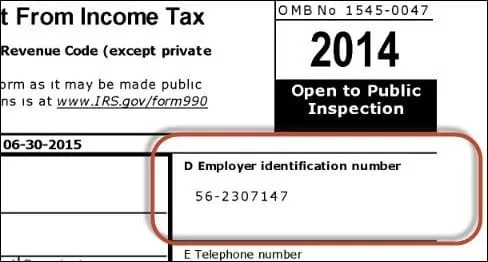
After formation, an EIN (Employer Identification Number) must be obtained. This is necessary, on the one hand, to be able to hire employees, and on the other hand, to get a bank account and other payment service providers (Stripe, Paypal...). Due to the current workload of the IRS in recent years, it can take several weeks for it to be issued.
First of all, you need an address for the company you want to found. We provide this for our customers in the form of a flexi-office or postal address, which is sufficient. This address is also sufficient for most banks.
The opening of the bank account can only take place once you have an address, the company has been founded, and you have received an EIN from the IRS. Subsequently, you can use this to open an account remotely, relatively quickly and straightforwardly with various fintech banks. We recommend the following providers, among others:
For a local bank like Bank of America, Chase, or Citi, you also need an ITIN, which is an Individual Tax Identification Number. Additionally, an account of this type can only be opened in person and usually takes several days.
Accordingly, in most cases we recommend one of the aforementioned FinTech solutions.

Once a year, the annual report must be done. In the USA, this is the so-called annual report. This has nothing to do with bookkeeping or financial statements, but is a formal confirmation that the LLC is still active and the information regarding owners and managers is up to date.
There are additional potentially legal and bureaucratic requirements for the US LLC or its owners. However, that depends on the business itself. We provide individual consulting to remain legally compliant. However, the following areas affect most US LLC owners.

Perhaps the most important form is Form 5472. This is an information return for U.S. LLCs that are 25 % or more owned by foreign owners and that have also conducted transactions between the LLC owner or related LLCs.
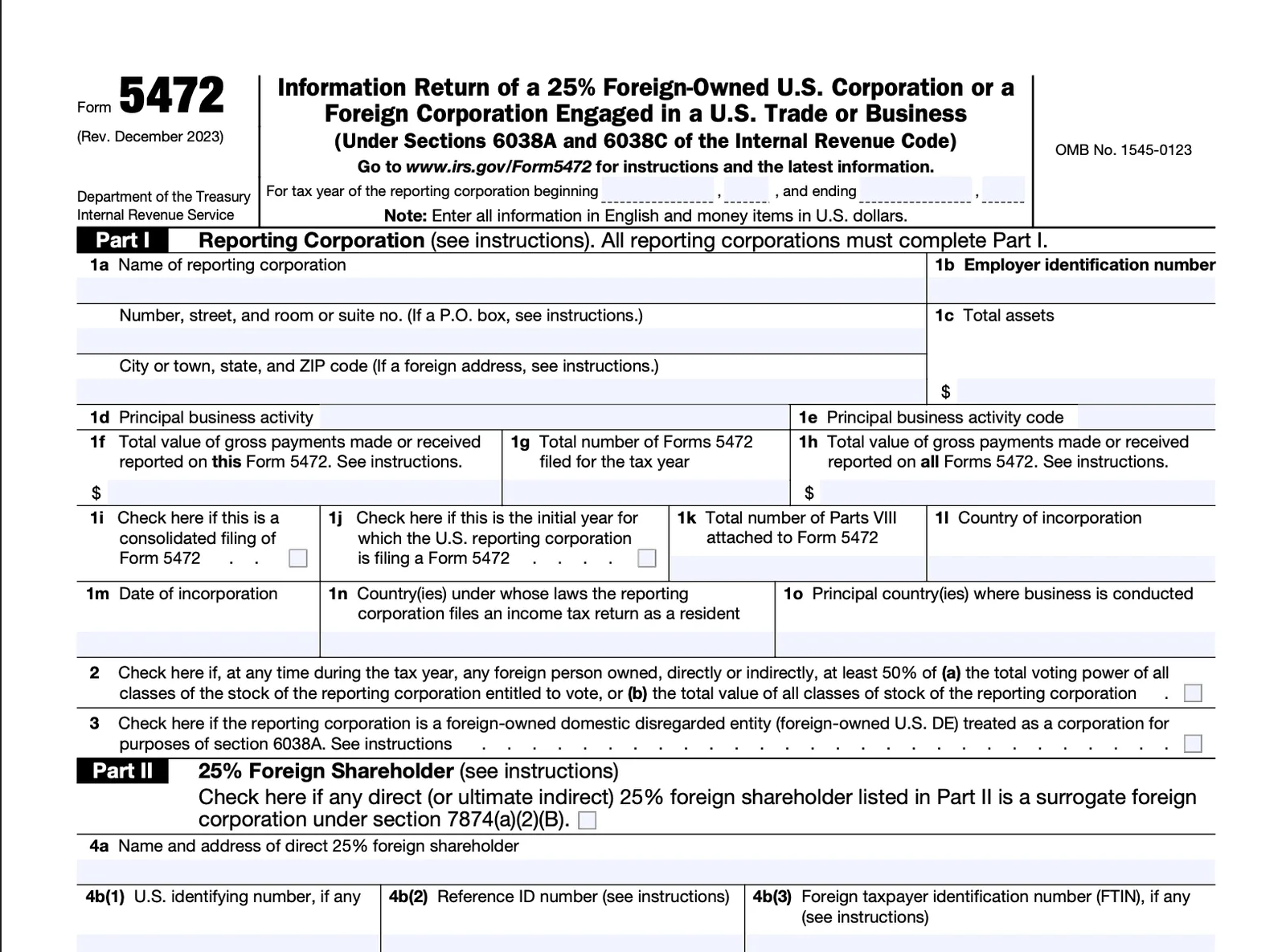
This form is mandatory and was introduced because, historically, profits from US companies were repeatedly siphoned off into low-tax jurisdictions (base erosion and profit shifting). Although this is not the case in practice for most US LLC owners, the form must be completed.
Specifically, details regarding the owner, their transactions, and related US LLCs must be provided here.
However, the filing deadline for Form 5472 is April 15 of the following year.
The next form that must be submitted in any case is Form 1120. This is similar to the annual financial statements known from countries like Germany or Austria. Specifically, it is the U.S. Corporation Income Tax Return.
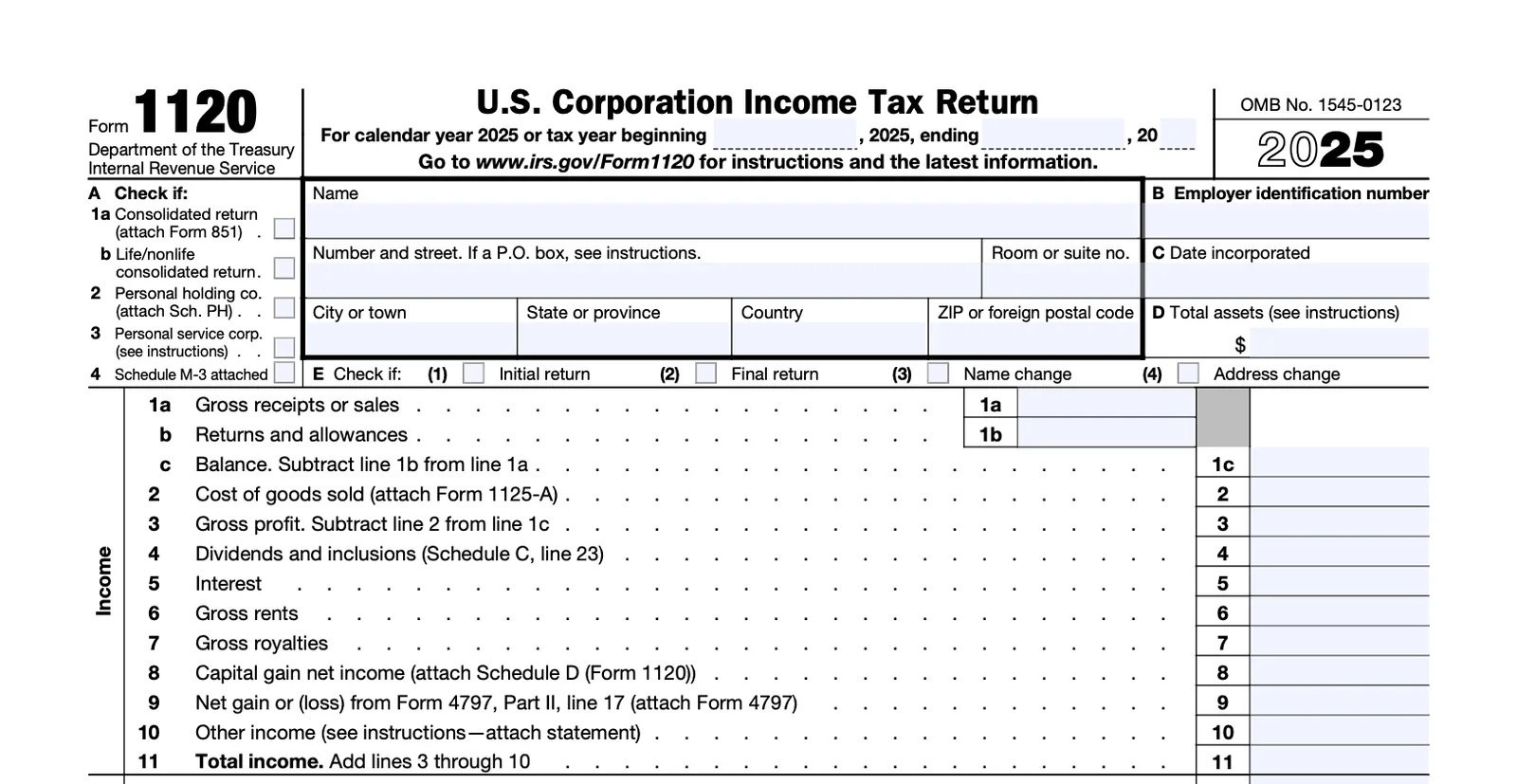
However, since most of them do not trigger a US tax liability and are not taxed as a corporation either (the tax generally passes through to the owner, as described at the beginning), this is effectively a zero tax return or a so-called pro forma filing.
Even though this is a zero tax return, it definitely needs to be filed.
However, anyone who has previously filed Form 8832 and wants the US LLC to be taxed as a corporation must consequently also properly complete Form 1120. However, this does not apply to most foreign owners.
The filing deadline for Form 1120 is April 15 of the following year.
Anyone who runs a US LLC with a partner must fill out Form 1065. This is known as the partnership return. The US LLC can still remain tax-exempt if no tax liability is triggered in the US and the owners also do not trigger a tax liability in any other country.
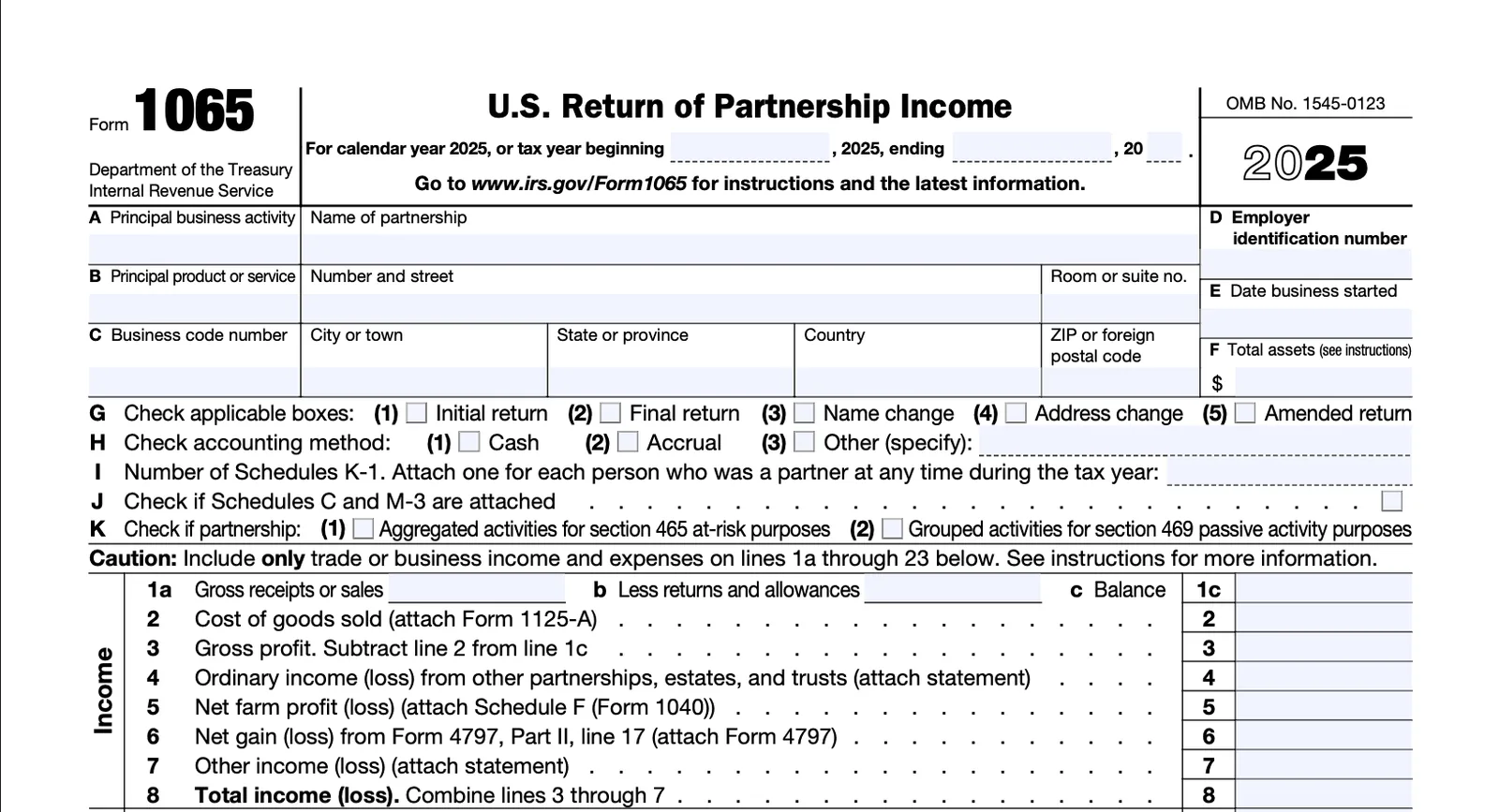
The difference here, however, is that this form must be filled out correctly, which means bookkeeping including a profit and loss statement. In this regard, it is advisable to work with accounting software and keep receipts accordingly in advance.
Another difference is the submission deadline, which is set for March 15th.
Anyone who triggers tax liability in the USA through employees, offices, warehouses, or similar means becomes subject to taxation. Unless otherwise specified, corporate profits are taxed at the income tax rate. This requires a personal income tax return, just like a traditional sole proprietorship or partnership.
Form 1040 is for all those who live in the USA, and 1040-NR (Non Resident) is for all foreign US LLC owners who are subject to tax.
Another important filing is the FBAR. The abbreviation stands for Foreign Bank Account Reporting and applies to US LLC accounts held abroad (e.g., a Wise EUR account) that exceed a balance of 10,000 USD at any time during the year. This reporting can and should definitely be done online in the following year.
The costs for the formation and ongoing compliance of a US LLC are relatively low in international comparison. Below is a table of the costs for some of the most popular states in the US.
GLOBAL SETUP All figures in USD. Registered agent service included in every total.
| Cost | FloridaSun State | WyomingCheap | DelawarePrestige |
|---|---|---|---|
| Setup — one-time | |||
| Establishment feeto the federal state | $125,00 | $100,00 | $110,00 |
| Registered Agent1st year | $125,00 | $125,00 | $125,00 |
| A IRS | Free | Free | Free |
| Total starting costs | $250,00 | $225,00Cheapest | $235,00 |
| Ongoing — annually | |||
| Annual state feeReport / Tax | $138,75 | $60,00 | $300,00 |
| Registered AgentExtension | $125,00 | $125,00 | $125,00 |
| Total per year | $263,75 | $185,00Cheapest | $425,00 |
| For orientation | |||
| Fee type | Annual report | license tax | Franchise tax |
| Due date | 1. May | Founding month | June |
| State income tax | None | None | None |
| default penalty | $400 | Resolution | $200 +1.5%/month. |
The US LLC legal form has potential disadvantages when compared to other legal forms both nationally and internationally. The following points should definitely be considered before hastily forming a US LLC.
A US LLC is not always tax-exempt or is only tax-exempt under certain circumstances. The most important circumstance is that you yourself do not have a tax residency in any country and therefore are not subject to tax anywhere.
Anyone who permanently resides in a country and also has a tax residency there must comply with local laws and pay income or corporate tax accordingly, even if the US LLC is located in the USA. This is due to the international tax law standard, which states that a company is taxed where it is actually managed and controlled (Place of Effective Management).
This also includes countries with territorial taxation. It would be a mistake to believe that you do not pay taxes in Paraguay, Panama, or the Philippines. This is because the US LLC, if managed domestically, is taxed locally and is not considered tax-free foreign income. That would only be the case if the company is also managed abroad (by an external manager).
Another tax trap in this area is clearly the VAT, which applies in Europe to numerous sales of physical or digital products in the B2C sector.

Below is an overview of the most frequently asked questions regarding the US LLC and its formation.
Basically, anyone can form an LLC in the USA as long as they bear the costs for it.
The most popular use case for a US LLC is when it is combined with perpetual traveling, meaning statelessness. This eliminates tax obligations in the area of corporate or income tax.
Furthermore, it makes sense to form a US LLC if you want to serve the local market in the US.
When comparing two of the most popular offshore entities, clear differences emerge.
A Free Zone company in Dubai primarily enables access to physical banks in Dubai itself and the opportunity to establish residency there. That can certainly make sense from a tax perspective.
US LLCs do not provide a residency visa, but they are somewhat cheaper. Although the selection of banks is large, in practice it is much harder to get an account with a physical bank. To do that, one usually has to rent an office and also demonstrate a personal physical presence in the US.
From a tax perspective, both legal entities are very attractive, although the US LLC generally only makes tax sense if you do not establish residency in any country.
If you, as the owner of the LLC, live in Germany yourself and it is also managed from Germany, the LLC must of course also be registered in Germany and any profits must be taxed there. Substanceless offshore companies, which a US LLC typically is, must be taxed at the place of management.
In our experience, US LLCs work great for anyone living outside the US in a tax-favored country. The low annual costs, simple setup, and good reputation of the US are ideally suited for entrepreneurs and the self-employed.
US LLCs are a great legal form, especially for non-US citizens. They are particularly impressive due to potential tax and bookkeeping exemptions, as well as low costs and bureaucracy. All of this at the same time with a high level of security and anonymity.
Should you be interested in a US setup, you are always welcome to contact us at any time. contact.

For over ten years, Clemens has been advising entrepreneurs, investors and families on international company formation, tax strategy and relocation of residency. His focus: legal, bank-compliant structures that hold up in practice, not just on paper.
Articles by Clemens
More and more entrepreneurs want a Start a company in Dubai . However, a simple company in a free zone is often not enough, and a mainland company must be established in Dubai.

Dubai has over 30 different free zones where you can set up a company. But which free zone is the best for starting a business, what is the process like, and how much does such a company formation actually cost?

In a globalized world, an increasing number of entrepreneurs, investors, and digital business models are looking for efficient solutions to optimize taxes, minimize bureaucracy, and protect their wealth. An offshore comp

Schedule a 30-minute conversation with a senior consultant. We answer your questions and work out the best path to your goals.