Clemens Kohlbacher
Company formation
Forming a US LLC: Benefits, Process & Costs (Guide)
US LLC formations are enjoying ever-increasing popularity. But how sensible or advantageous is this legal form really, and how do you implement it?

More and more entrepreneurs want a Start a company in Dubai. However, a simple company in a free zone is often not enough, and a mainland company must be established in Dubai.
Here is the comprehensive guide on setting up a mainland company in Dubai.
In the comprehensive guide Dubai Mainland vs. Freezone the differences have already been described in detail. Here is another brief summary of the advantages and main differences compared to Freezone companies in Dubai.
The most important difference is the local business capability in Dubai. With a Mainland company, you have the opportunity to do business with other local companies in Dubai and the Emirates, respectively. By comparison, this is not possible or only possible to a limited extent with Freezone companies.
For example, anyone engaged in real estate trading or brokerage needs a mainland company. The same applies to other services that are provided locally, as well as the trading of various goods or having a physical sales location on-site.
So anyone who wants to do business in Dubai or the Emirates needs a mainland company.
The next point follows directly from this and relates to the variety of licenses available. Mainland companies generally offer a wider range of licenses to choose from. Depending on the nature of the business, it is sometimes necessary to establish a mainland company.
The next point is their higher reputation. Since mainland companies are generally subject to stricter oversight, require more effort to establish, and need a local office, they enjoy a higher reputation. In practice, this can sometimes be useful when opening local bank accounts or applying for loans.
From an international perspective, it is often less significant.
Below is the process for setting up a Mainland company in Dubai.
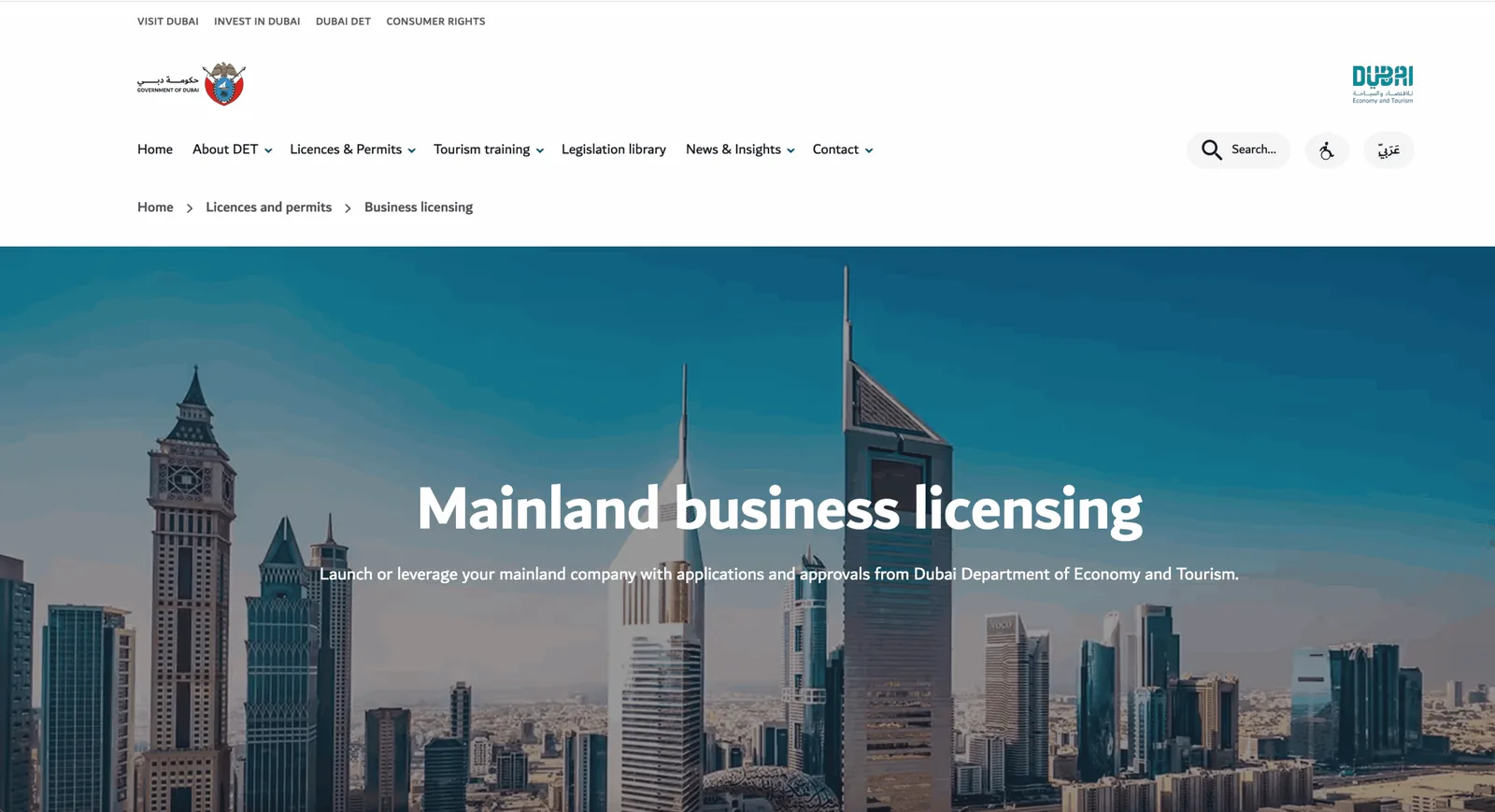
First, you need to define the company's purpose and find the appropriate license. To do this, you can go to the Dubai Department of Economy and Tourism, see DET for more information. There are basically four different types of licenses:
In addition, there is a dual license that allows you to operate simultaneously on the mainland and in the free zones.
Next, it is crucial to choose the right name. It should be a good fit for the company and comply with all legal requirements—that is, it should not violate any laws.
With the name and the desired licenses, you can obtain pre-approval. This preliminary confirmation lets you know that you generally meet the requirements.
Following that, it is necessary to buy or rent an office. In comparison to Free Zone companies, it is crucial that the company has a physical office. A flexi-office or desk in a coworking space is not sufficient.
If you don't need a physical office yourself but simply want to meet the requirements, you should consider the most affordable options available. These usually start at €200 per month.
Once you've rented the office, you'll receive confirmation through the EJARI registry. This registry regulates the real estate market in Dubai and serves as official confirmation of the lease.

As soon as you EJARI Once you have the certificate, you can submit it along with the other documents. At this point, you’ll also need to pay the license fees and government fees. This officially completes the incorporation process. You’ll typically receive the confirmation along with the incorporation documents within a few business days.
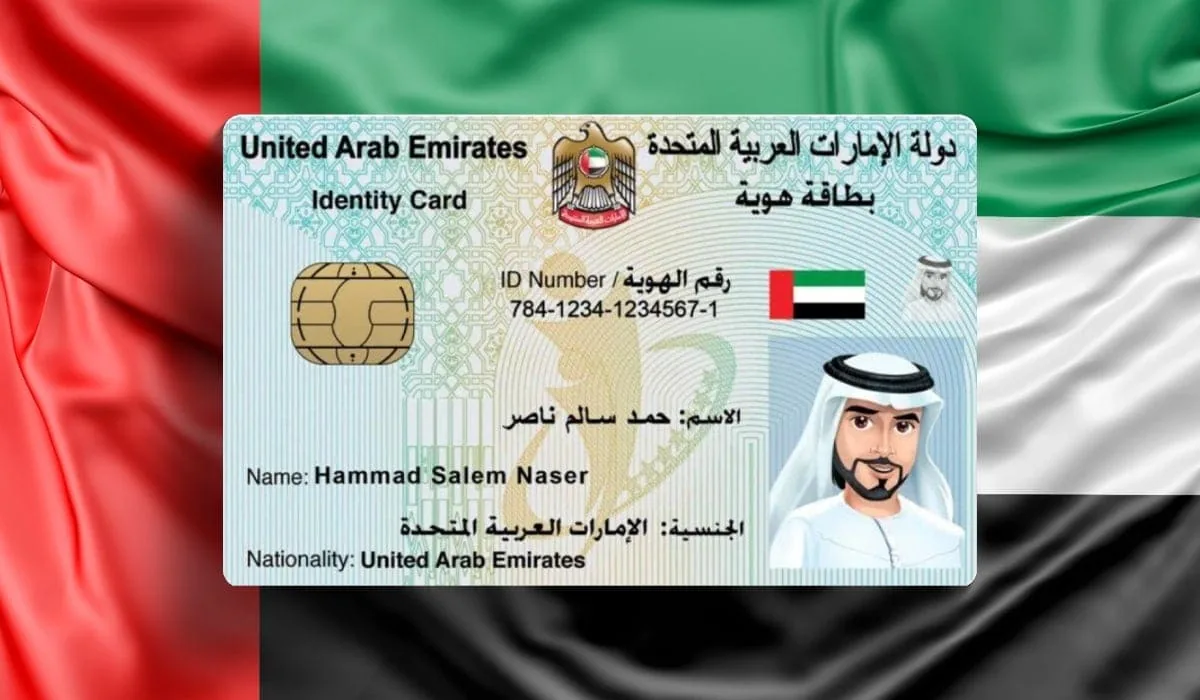
An important intermediate step is obtaining a Emirates ID and one Visa for the General Manager, meaning the managing director. Because they have to set up the bank account for the company, and that in turn only works with an active eID and VISA.
Once the company is incorporated, you can apply for an e-Visa to enter the country. This usually takes only a few business days. You use this e-Visa to enter the country and either have it stamped at passport control or have the document scanned electronically at passport control at the airport.
After successfully entering the country, you must undergo a medical checkup on site. The brief medical checkup usually takes only 10 minutes, and you will receive the results within 1 hour.
After that, you submit an application for the Emirates ID (Emirates ID Application) and go to biometrics with this form. Here, fingerprints are taken once. Afterwards, the documents are submitted again and you will receive the Emirates ID within 3-5 days.
The entire process can be somewhat challenging, which is why we always recommend hiring a service provider to handle it. We work closely with our clients to ensure that everything runs smoothly and quickly.
To be fully operational, you need a bank account. Ideally, you should choose an account at a brick-and-mortar full-service bank in Dubai. As a rule, it’s much easier to open accounts for mainland companies than for free zone companies.
There are some Banks in Dubai, depending on your activity and sales volume, we recommend different banks. These include, among others:
Ideally, you combine your personal account with the business account and open both at the same bank.

After incorporation, you are required to apply for a tax number within 60 days. The so-called corporate registration has been mandatory since 2023.
Furthermore, it is important to continuously maintain clean bookkeeping, pay VAT quarterly, and submit annual financial statements at the end of the year. Here, just like in other countries, it is strongly recommended to Tax advisor in Dubai to commission.
An important point is the topic Taxes in Dubai, which also apply to mainland companies. Basically, here is an overview of the most important tax rates for mainland entrepreneurs in Dubai:
The costs for establishing a mainland company vary and depend heavily on the selection and combination of licenses, as well as the number of visas the company sponsors. As a rule, mainland company formation starts at around €13,000 – €15,000.
An overview of the most frequently asked questions about setting up a mainland company in Dubai.
Typically, the entire process takes 1-2 weeks for company formation and another week to obtain the Emirates ID locally, as well as opening the bank accounts.
Yes, a mainland company is necessary to engage in real estate trading or brokerage activities as an independent real estate agent.
However, it is not necessary for private buying and selling.
In summary, Mainland companies in Dubai primarily serve the purpose of enabling you to conduct business locally. This means you can engage in business with other companies in Dubai, such as trading goods or providing services locally. The setup process generally takes a bit longer than with a Free Zone, and the overall endeavor is also somewhat more expensive.
If you need assistance with a Company formation in Dubai you need anything, please feel free to contact us at any time.

For over ten years, Clemens has been advising entrepreneurs, investors and families on international company formation, tax strategy and relocation of residency. His focus: legal, bank-compliant structures that hold up in practice, not just on paper.
Articles by Clemens
US LLC formations are enjoying ever-increasing popularity. But how sensible or advantageous is this legal form really, and how do you implement it?
Dubai has over 30 different free zones where you can set up a company. But which free zone is the best for starting a business, what is the process like, and how much does such a company formation actually cost?

In a globalized world, an increasing number of entrepreneurs, investors, and digital business models are looking for efficient solutions to optimize taxes, minimize bureaucracy, and protect their wealth. An offshore comp
Schedule a 30-minute conversation with a senior consultant. We answer your questions and work out the best path to your goals.