Collecting miles and points is very trendy. More and more people see the benefits and want to profit from upgrades on airplanes, in hotels, and other amenities. But which credit card is the best for collecting miles?
In this comparative test, we discuss the best credit cards, compare them, and provide practical tips to effectively earn miles and benefit from them.
Why collect miles?
Collecting miles is a central element in Travel Hacking and is simply nothing other than getting points for everyday expenses, which in turn can be redeemed for hotel rooms, flight ticket upgrades and much more.
Here, the terms miles, points, or variations thereof are used as synonyms. Ultimately, it is all the same, except that certain providers modify and brand this term. For example, Membership Rewards points with AMEX or RevPoints with Revolut. However, miles, points, or similar are all the same thing.
The Best Credit Cards for Earning Miles
Currently, there are a variety of credit cards with which you can earn miles. Here is an overview of the currently best credit cards for effectively earning miles. However, you should be aware that there is no single best credit card for everyone. You have to find the best credit card for yourself that best covers your own needs. Every credit card offers individual benefits.
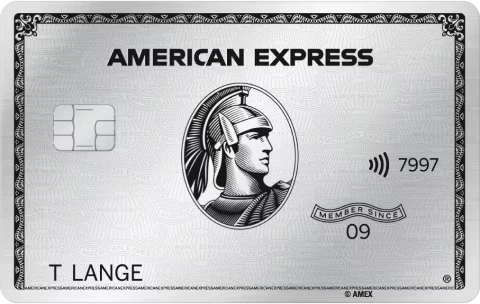
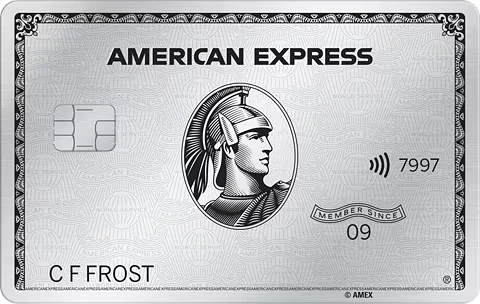
1. American Express Platinum
The presumably best general credit card for earning miles is definitely the American Express Platinum Card. Because aside from getting one point per euro spent, there are numerous other benefits. These benefits are so great that they quickly offset the high annual fee. Especially if you travel a lot.
The card costs €60 / month and offers the following benefits:
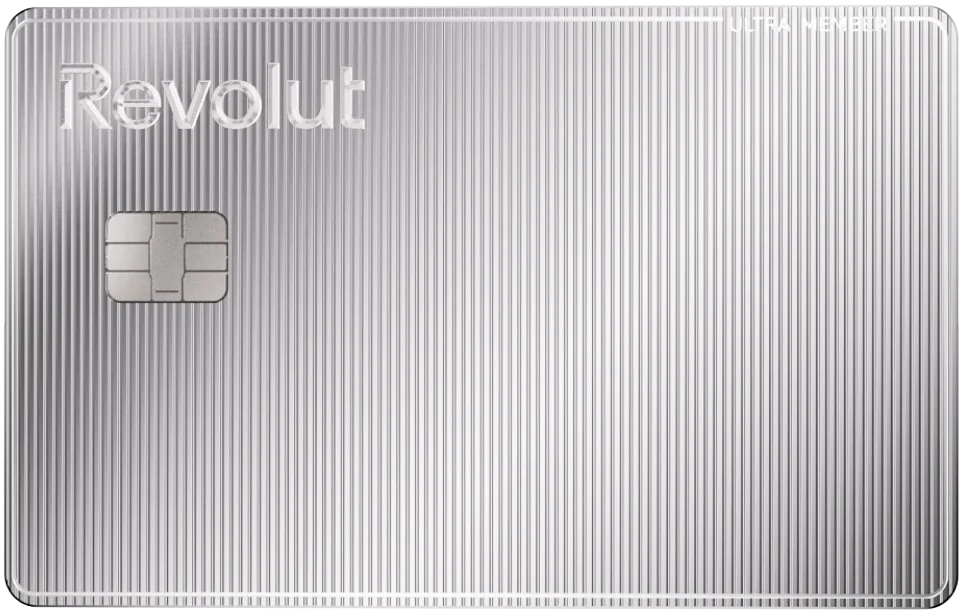
A new card that rolls out new features and benefits every few months is the Revolut Ultra. The fintech company's most powerful credit card now offers numerous benefits for travelers and frequent flyer mile collectors. With the card, you earn 1 RevPoint per euro spent.
For a monthly fee of €60, you get the following benefits:
3 GB per month of worldwide eSIM data!
Comprehensive travel insurance
Lounge Access at Over 1,000 Airports
No foreign currency fees
No cash withdrawal fee for amounts up to €2,000
Exclusive partner subscriptions worth €4,000 per year (NordVPN, Headspace, Uber One…)
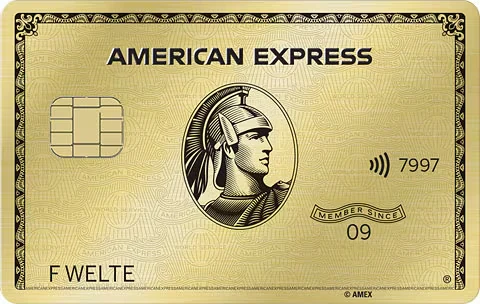
Another classic when it comes to credit cards for earning miles is the American Express Gold. Just like its big Platinum sibling, you get 1 point per euro spent. The benefits here are fewer, but in return, the monthly fee is only 1/3, which is €20 per month
€72 starting balance
€290 credit for Sixt, FREENOW, taxi and more.
Comprehensive travel insurance
20 % Roaming Credit
4. Eurowings Premium
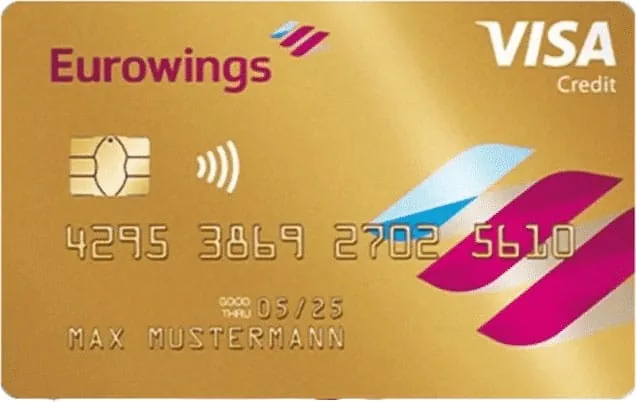
Another interesting and quite popular card is the Eurowings Premium, issued in partnership with VISA. The card is very affordable, but unfortunately only offers 1 mile for every 2 euros spent.
Note: In Austria, the partnership with Austrian Airlines continues.
The Miles & More Eurowings Card is free for the first year and then costs €99 per year.
3,000-Mile Welcome Bonus
Avis Preferred Status + Rental Discount
Priority Check-in for Smart and BIZ Class
Fast Lane at 20 airports
Comprehensive travel insurance
No foreign currency or cash fees
US Maps (Expert Level)
Once you've covered the local cards in Europe and understand how the game works, you might want to consider moving on to the next level. Here, we're talking about international cards, which are far more powerful than their European counterparts.
These cards are also usually harder to get and require proof of residence as well as a US bank account. However, you do not actually have to live in the USA to get them. The exact instructions for these cards would go beyond the scope of this review, but we are happy to provide the necessary contacts to obtain them.
Here, however, is a comparison of the best US cards.
1. American Express Platinum (U.S.)
The king of commercial credit cards is definitely the American Express Platinum US. The benefits here are significantly higher than those of its German counterparts, because you get far more points per dollar spent.
You get 5 points per dollar spent on flights and hotels here!
80,000 points! Welcome bonus
Gold Status at Hilton & Marriott
$200 Airfare Credit
$500 Credit for Centurion Lounges
$200 Hotel Credit
$240 Digital Entertainment Credit
$200 Uber Cash Balance
Comprehensive travel insurance
2. Chase Sapphire Reserve (Business)
If you own a US LLC, you will probably already be benefiting from numerous tax advantages. To maximize these, it is worth combining them with a US bank account and the Chase Sapphire Reserve Business card. It is currently the best card for businesses alongside the AMEX Platinum Business and even surpasses the benefits of the AMEX Business.
Collecting miles through the company couldn't be better, as you get the following rates per specified US dollar: 8x on travel, 5x on Lyft, 4x on hotels, 4x on flights, and 3x on online advertising.
The last point is incredibly powerful for companies and advertising agencies that spend several thousand USD in advertising costs monthly. Here, you get 3 times the points back!
However, the annual cost is a hefty USD 795.
200,000-point welcome bonus!
Gold Status at Hilton & Marriott
300 $ Travel Credit
200 $ Workspace Credit
IHG Platinum Elite Status
Car rental benefits
uvm.
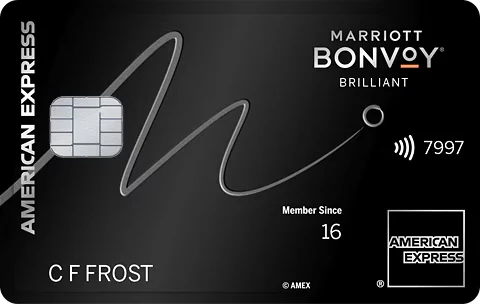
3. American Express Marriott Bonvoy
If you're already in the U.S. and have chosen a general-purpose credit card (for both personal and business use), you should also get a hotel-specific card. There are several cards to choose from; depending on your preferred hotel group and brands, you should pick one.
Very many are very satisfied with the brands of the Marriott Bonvoy hotel group. Per US dollar spent, you generally receive 2 points except for the following categories: 6x points on hotels, 3x points on restaurants, 3x points on flights.
With the Brilliant Card, you get numerous benefits for just $650 a year.
185,000 welcome bonus
Marriott Platinum Status
1 free night per year
No FX fees
A $100 hotel gift certificate per stay at Ritz-Carlton and St. Regis.
Priority Pass
4. American Express Hilton Honors
If you like to travel and prefer Hilton's hotel chains and brands, you should go with the American Express Hilton Honors card. It is the hotel empire's strongest credit card and provides numerous benefits for travelers, even outside of the hotels. The annual fee is high at $550, just like with the other cards, but if you travel a lot and use the various credits, you quickly offset the fee.
175,000 Hilton Honors Sign-Up Bonus
1 free night per year
$400 in hotel credit
Hilton Honors Diamond Status
$200 flight credit
No FX fees
Baggage insurance.
Earning Miles in Everyday Life
The biggest misconception when it comes to collecting miles: you have to constantly sit on a plane.
In fact, for most collectors, the majority of their miles are earned on the ground—through everyday expenses they’d incur anyway. The credit card is the key tool here, as it turns every purchase into points. If you consistently use the right card for your purchases, you can rack up tens of thousands of miles a year without booking a single flight.
While shopping and online shopping
The simplest method is also the most effective: pay for as many expenses as possible with your credit card instead of cash or a debit card. Supermarket, gas station, restaurant, drugstore, online orders—every euro counts. With a card that offers one point per euro, a single person's everyday living expenses alone quickly add up to 10,000 to 15,000 points a year. You can get even more out of it through the providers„ shopping portals. With “Amex Offers," American Express regularly runs promotions that offer additional points or statement credits for purchases with specific merchants. You can also collect extra miles on online orders by using upstream miles-shopping portals. The extra effort is minimal—just one more click before making a purchase.
making fixed costs mileage-dependent through indirect means
This is where it gets interesting for advanced users. Rent, insurance, electricity, and savings plans usually can’t be paid for with a credit card—and that’s exactly where the greatest untapped potential lies, because these are the biggest monthly expenses. The common trick is to use a fintech account like Revolut. You top up the Revolut account with your credit card and earn miles in the process. You then make transfers and standing orders from this balance. This way, expenses that would otherwise slip through the net also earn miles. Important: Not every card is accepted for such top-ups, and some providers classify certain transactions as cash advances – this can trigger fees and does not earn points. Therefore, check the terms and conditions of your card carefully before taking this route.
Use promotions, coupons, and bonus offers
Card portals and loyalty programs constantly publish time-limited promotions: double points on specific categories, coupons for individual merchants, or special offers during promotional periods. Anyone who checks in regularly here and activates the coupons before shopping significantly increases their earning rate at no extra cost. A newsletter subscription to the respective provider is usually enough to never miss a promotion. In short: The key isn't in flying, but in consistency. If you consolidate all your spending on the card, take advantage of promotions, and cleverly incorporate major fixed costs, you'll earn more miles in your everyday life than many frequent flyers.
Redeeming miles correctly – what are they really worth?
Earning miles is only half the battle. What really matters is what you get out of it in the end—and this is exactly where the savvy collector stands apart from the casual user. After all, the value of a mile isn’t fixed; it depends entirely on what you redeem it for.
The milestone value: an orientation
As a rough rule of thumb, for most programs the value is about one to one and a half cents per mile. However, that is just the average. If you redeem miles for a cheap merchandise reward from the reward shop, the value often drops significantly below that. Conversely, if you use the same miles for an upgrade or a long-haul flight in Business or First Class, the equivalent value can rise to several cents per mile. Thus, depending on the redemption, the exact same mile can be worth three to five times as much.
The consequence of this is simple: miles are almost always most valuable when used for flights in a higher class – not for merchandise rewards and not for paying for economy tickets whose cash price is low anyway.
How much do typical premiums cost?
The exact mileage prices vary depending on the airline, route, time of travel, and availability. As a rough guide, you can use the following values:
Short-haul flight within Europe (Economy): in the range of about 15,000 to 25,000 miles for a round trip.
Long-haul flight (Economy): roughly 40,000 to 60,000 miles for a round-trip flight.
Upgrade or award flight in Business Class on a long-haul route: roughly from about 80,000 to 120,000 miles and upwards.
These figures are intentionally given as a range—only the current display in the respective program's booking system is binding. However, they demonstrate the principle: with a generous welcome bonus of 85,000 points, a long-haul business class upgrade is already within reach.
Tip: Check availability in good time
Award flights have limited availability. If you’re flexible about your travel dates and route and book early, you’ll find attractive itineraries much more easily. It’s worth having a specific destination in mind even as you’re earning points—that turns an abstract points balance into a tangible trip.
What to watch out for when collecting miles
Collecting miles is worth it – but only if you know a few pitfalls. These three points determine whether the hobby ends up being a profit or costs you money.
Avoid mileage expiration and loss
Collected miles do not last indefinitely. With Miles & More, award miles normally expire 36 months after they are earned, always at the end of the respective quarter. Anyone who collects for years without redeeming risks having the oldest miles expire before they can be used.
However, there is a simple safeguard: Miles & More credit cardholders generally benefit from the fact that their miles remain valid for as long as they hold the card. Achieving frequent flyer status also protects your miles from expiring. This is precisely one of the underappreciated benefits of a mileage credit card: It’s not just a tool for earning miles, but also a safeguard for the miles you’ve already earned. Still, keep an eye on your mileage account—logging in once a quarter is enough to stay on top of things.
weight the annual fee against the benefits
Some of the strongest cards cost several hundred euros a year in some cases. This fee is not an end in itself – it has to pay off through tangible benefits. Therefore, do the math honestly: how much are the welcome bonus, the annual travel, restaurant, or mobility credits, and the accumulated miles actually worth to you?
With many premium cards, the annual credits alone offset a large portion of the fee – but only if you actually use them. Travel credit that goes unused is wasted money. For those who travel frequently and actively use the benefits, even an expensive card pays off quickly. Conversely, anyone who just leaves the card sitting in a drawer loses out. Therefore, choose the card based on your actual usage habits, not the longest list of benefits.
Always repay the full amount
Finally, the most important rule, and it is non-negotiable: Always pay your credit card bill in full and on time. Credit cards offer an extended payment period, and some cards allow you to pay off the outstanding balance in installments. That is precisely what you should avoid. The interest rates on such partial repayments are high and will wipe out the value of every single mile you've earned many times over.
Collecting miles only pays off for people who have their expenses under control and only spend what they actually own anyway. The credit card is then a bonus tool for expenses you are making anyway – not a reason to spend more. For anyone who heeds this principle, collecting miles is a real win.
Experiences
In our experience, almost all of the mentioned credit cards pay off. Especially when you are aware of the respective cards' benefits and use them strategically. Above all, the credits for flights, hotels, restaurants, and other amenities amortize the monthly fees relatively quickly.
Summary
Credit cards are great for earning miles on expenses you are making anyway. Depending on your budget, there are different credit cards that are more suitable for you. Generally speaking, there is no single best credit card. Anyone who wants to play the credit card game even further to maximize points and benefits combines different cards. Ideally, a general card like the American Express Platinum with a hotel card. However, if you want to get the most out of it, you need to get a card from the USA. If you have any questions about this, we are happy to help.
Share
Clemens KohlbacherFounder & Managing Director, Global Setup
For over ten years, Clemens has been advising entrepreneurs, investors and families on international company formation, tax strategy and relocation of residency. His focus: legal, bank-compliant structures that hold up in practice, not just on paper.
Opening an anonymous bank account can have many reasons and offer corresponding advantages. Below is an introduction to all legal options regarding anonymous banking, including instructions.
In times of political and economic uncertainty and dwindling privacy (EU), offshore accounts are becoming increasingly popular. In addition, these are an essential part of the Flag theory .
Anyone looking for an international bank account that is straightforward, versatile, and business-friendly will sooner or later come across Georgia. The small country in the Caucasus has developed into a popular destinat
June 3, 2026·6 min read
Not sure where to start?
Schedule a 30-minute conversation with a senior consultant. We answer your questions and work out the best path to your goals.


 Clemens Kohlbacher






![Opening an anonymous account in Georgia [Guide]](/assets/img/tbc-bank-tbilisi.webp)