Besides the Asset register At a Europe-wide level, Germany now has further measures in place for the alleged combating of black money and other illegal financial flows.
The Asset Concealment Combating Act, or VVBG for short, builds on EU measures and further increases the monitoring and transparency of transactions as well as existing assets.
This article explains the impact this has on individual citizens and how to protect oneself against potential disadvantages, such as the loss of privacy.
Explanation
The Asset Concealing Combating Act is a draft bill by the German federal government aimed at improving the transparency of corporate structures and combating money laundering and the concealment of assets. It builds upon existing regulations on transparency and anti-money laundering and is intended to tighten them further.
Goals
The VVBG is part of Germany's efforts to meet and further improve international standards for combating money laundering and terrorist financing. It responds to criticism from international organizations such as the Financial Action Task Force (FATF), which in the past accused Germany of a lack of transparency regarding beneficial owners.
The law is part of a series of measures aimed at making Germany less attractive for illicit financial flows and is intended to help strengthen the integrity of the financial system.
Below is an overview of the federal government's main objectives with the introduction of the new law.
Expansion of the transparency register:
The transparency register is to be expanded into a full register, which means that all relevant information on beneficial owners in Germany is to be recorded in a central register and made accessible.
This makes it easier to identify the true owners of companies and is intended to make it harder to conceal assets through complex corporate structures.
Improvement of cooperation between authorities:
The cooperation between the responsible authorities is to be strengthened in order to accelerate the exchange of information and make it more effective.
This is expected to improve, in particular, the fight against money laundering and the financing of terrorism.
Increase in penalties:
Violations of the reporting and disclosure obligations in the transparency register are to be sanctioned more severely.
Companies that fail to comply with their reporting obligations face higher fines.
Increasing transparency in fiduciary relationships:
Trustee arrangements are to be subject to stricter controls and made more transparent in order to prevent abuse.
Increased monitoring and enforcement:
Resources for monitoring and enforcing legal provisions are to be increased to ensure that the regulations of the VVBG are implemented effectively.
Content (as of September 2024)
Below is a short list of the most important points of the law, which relate to
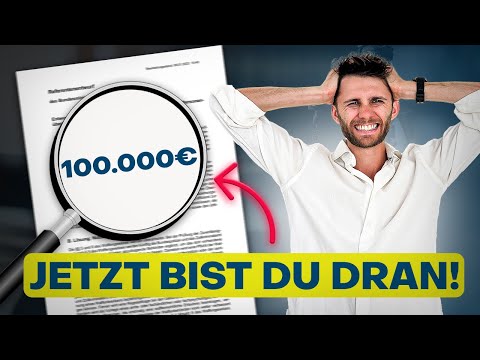
Lump-sum recording of all assets with a value of €100,000 or more
Should Context between consisting of several items, these or their value can be added together and be seen as a single object. Thus, smaller items can also be included together in this database or recording process.
Objects do not necessarily have to be owned, but also only pure availability triggers the law or recording.
People who economicconnection to risk areas„ have. This version is still very open, but can take on incredible proportions; depending on how a risk area is defined, this could, for example, apply to all countries that show a lower tax burden or other anomalies compared to Germany.
Critique
However, the planned Asset Concealment Countermeasure Act (VVBG) is to be viewed very critically by the individual citizen.
While it can be seen as an important step in combating money laundering and illicit financial flows, there are various criticisms, particularly regarding the impact on privacy and the administrative burden.
Invasion of privacy:
A major point of criticism concerns the potential invasion of privacy. By expanding the transparency register into a full register, extensive information on beneficial owners is collected and published. Critics fear that this leads to a disproportionate disclosure of personal financial circumstances.
This could be particularly problematic for individuals who do not wish to make their financial situation public for legitimate reasons, such as protection against crime or due to personal security concerns.
Risk of data misuse:
The extensive collection and centralized storage of data always carries the risk of data misuse. Critics warn that sensitive information could fall into the wrong hands or be exposed to unauthorized access, which could lead to significant privacy issues.
Although access to the transparency register is generally only permitted to certain authorities and, under certain conditions, to the public, the risks remain.
Bureaucratic effort and costs:
Companies and organizations are faced with a significant increase in administrative workload. The obligation to report and update data in the transparency register requires additional resources and can represent a financial and organizational burden, particularly for smaller companies.
In addition, stricter regulation and the associated sanctions for violations could lead to increased uncertainty and a further rise in compliance costs.
Impact on international competitiveness:
There are concerns that the increased requirements and the resulting costs could impair the international competitiveness of German companies. Some critics argue that stricter regulations could prompt companies to relocate their headquarters to less regulated countries.
Protective measure
Since this law already applies in Germany to assets starting from €100,000 (or if there is a connection between multiple items, they can be considered cumulatively), there is only a manageable amount of protective measures.
Donation
Should one find assets in one's possession, one could potentially divide and give them away as gifts. Of course, this option is limited by tax laws and naturally requires boundless trust.
According to Section 16 of the Inheritance and Gift Tax Act (ErbStG), the personal tax-free allowances for gifts are 500,000 euros for spouses, 400,000 euros for children and stepchildren, 200,000 euros for grandchildren, and 20,000 euros for all others Recipients.
But even here the law is not completely overridden, because the items must be economically realistic for the recipient (in relation to their income).
Emigrate
The probably safest and most far-reaching option is of course from Germany or even better from the EU (keyword EU further asset registerto emigrate. Because by relocating the main residence, all private possessions are no longer subject to German jurisdiction.
However, one should be careful regarding Exit tax in Germany,because this can potentially be triggered on certain asset areas. However, solutions exist for this as well.
Perhaps the most popular destination for Germans is the United Arab Emirates, more on that below – Moving to Dubai – Guide.
Summary
The VVBG is a double-edged sword. On the one hand, it aims at an urgently needed improvement in transparency and the fight against money laundering; on the other hand, it harbors significant risks for privacy and could entail a high bureaucratic burden. The challenge will be to strike a balance between these competing interests in order to adequately protect both security and citizens' rights.
Share
Clemens KohlbacherFounder & Managing Director, Global Setup
For over ten years, Clemens has been advising entrepreneurs, investors and families on international company formation, tax strategy and relocation of residency. His focus: legal, bank-compliant structures that hold up in practice, not just on paper.
In recent years, Germany and other EU countries have become increasingly unappealing to high achievers due to political uncertainty, high taxes, and economic problems. Consequently, a growing number of people are emigrat
Malta is a popular tax haven in Europe and is attracting not only tourists, but also a growing number of expats. In addition to the fine weather, attractive tax benefits also draw many entrepreneurs and investors to Malt
In times of economic and political uncertainty, as well as high taxes and the introduction of the Asset registers in the EU , more and more people from Germany are moving abroad.
July 2, 2026·7 min read
Not sure where to start?
Schedule a 30-minute conversation with a senior consultant. We answer your questions and work out the best path to your goals.


 Clemens Kohlbacher