Skip to content

Definition
The Load balancing is a term from German post-war history and refers to a state measure introduced after the Second World War to distribute the financial burdens and property losses caused by the war and expulsion in a spirit of solidarity across the entire population.
History
After the Second World War, many Germans suffered substantial losses of wealth, particularly through the loss of property in the former eastern territories of Germany, bomb attacks, expropriations, and general destruction. A severe imbalance arose between those who had lost almost everything and those who had emerged from the war relatively unscathed.
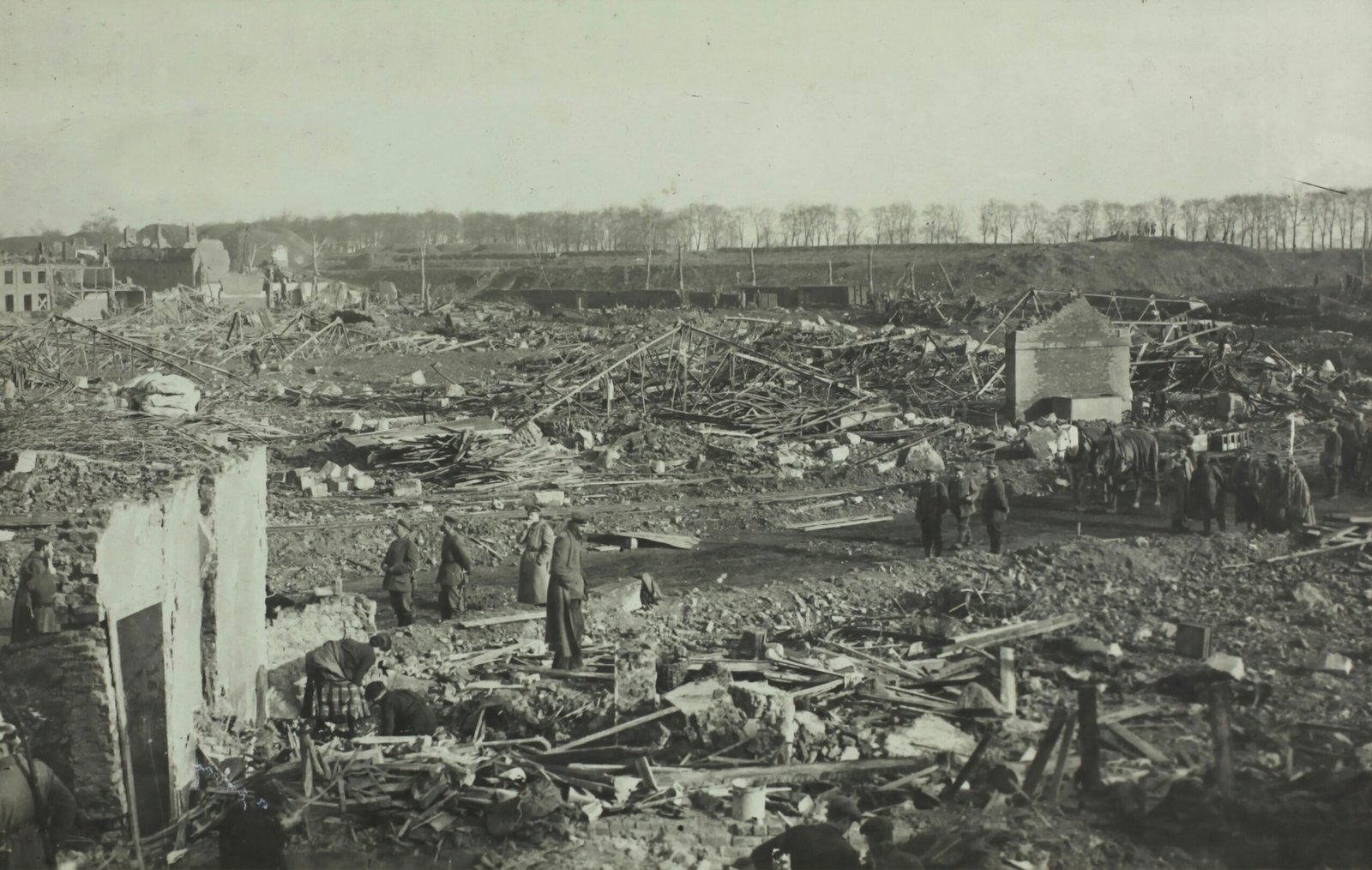
The Equalization of Burdens Act of 1952
To mitigate these imbalances, in 1952 the Equalisation of Burdens Act passed. The law stipulated that individuals and companies that had suffered relatively minor losses during the war should make a contribution in the form of a levy (the so-called equalization of burdens). This levy was paid into a fund, from which compensation payments were made to war victims, expellees, and those who had suffered losses.
Effects
Wealth tax: Wealthy citizens and corporations had to pay a levy that flowed into the equalization of burdens fund. This levy was graded and based on the amount of the assets.
Compensation: Compensation was then paid from the fund to those who had suffered significant financial losses, such as displaced persons, bombing victims, or war widows.
Objective
The goal of burden-sharing was to promote social justice and provide those affected with a new means of livelihood. It was one of the key measures taken by the early Federal Republic of Germany to promote reconstruction and economic and social stability.
Overall, burden-sharing made a significant contribution to solidarity and social harmony in postwar Germany.
Forecast for 2024–2025
Lately, there has been ongoing discussion about the possibility of a new burden-sharing levy, particularly in the context of financing major crises and challenges such as the COVID-19 pandemic, the energy transition, and the consequences of the war in Ukraine.
Reasons for burden sharing
Climate change and energy transitionThere is speculation as to whether a new capital levy could be introduced to finance the high costs of the energy transition and to combat climate change. This would mean that wealthy individuals would be called upon more to finance these measures in order to distribute the burdens more evenly.
Pandemic costsThe enormous costs generated by the COVID-19 pandemic have also led to discussions about whether some kind of burden-sharing measure should be introduced to cover government spending.
Inflation and Social Justice: In light of rising inflation and the associated social inequalities, consideration is also being given to measures that could distribute the burden more evenly.
Plans
So far, there are no concrete legislative projects or plans for a new burden-sharing scheme.
However, there are some political measures that indirectly prepare for this, such as Asset register, which is also connected to the Act on Combating Asset Concealment (VVBG)) stands for.
It is likely only a matter of time before the first measures are taken and the old law is reinstated in some form. After all, the severe economic deficits caused by misguided policies must inevitably be addressed and offset.